Moderate Evidence
Hba1cMetabolic Health

Best Supplements for HbA1c (Blood Sugar Control): What the Evidence Actually Shows

16 min read20 peer-reviewed sourcesUpdated Mar 20, 2026

Listen to this article

Audio available

Executive Summary

Here's a surprising fact about blood sugar supplements: the most popular ones people grab first aren't the ones that work best. Many reach for cinnamon or chromium. But the strongest proof points to two lesser-known options — berberine and nigella sativa (black seed).

Berberine can lower HbA1c by about 6.6%. Nigella sativa may cut it by nearly 10%. These aren't tiny effects. Every 1% drop in HbA1c cuts your risk of diabetes complications by about 21%. That means these supplements could meaningfully change your health trajectory — especially if you have prediabetes or early type 2 diabetes.

If you want to start, berberine at 1,500 mg per day (split into three 500 mg doses with meals) is the best-studied choice. Nigella sativa at 2,000–4,000 mg per day is another strong option. Curcumin (500–2,000 mg per day in a bioavailability-enhanced form) ranks third. Always talk to your doctor first — these can interact with diabetes drugs. Start with one supplement at a time so you can track what helps.
Key Terms to Know

Meta-Analysis
A statistical technique combining results from multiple studies to find overall patterns.
Glucose
Blood sugar level, the primary energy source for cells. Fasting glucose is normal, prediabetes, ≥126 suggests diabetes.
Triglycerides
Triglycerides, the primary fat storage molecule in blood. elevated levels indicate metabolic dysfunction and increase cardiovascular risk.
HOMA-IR (calc)
Insulin resistance by combining fasting glucose and insulin levels.
LDL Cholesterol (calc)
LDL cholesterol, the "bad cholesterol" that deposits in artery walls. elevated LDL is the primary driver of atherosclerosis and heart disease.
Oxidative Stress
Cellular damage caused by reactive oxygen species (free radicals) overwhelming antioxidant defenses.
Hemoglobin A1c
Average blood sugar over the past 2-3 months by assessing glycated hemoglobin. each 1% increase raises cardiovascular risk by 18%.

The Quick Answer

If you want to lower your HbA1c with supplements, here's where the evidence points:

Tier 1 — Strong Evidence (Proven): 1. Berberine — Lowers HbA1c by about 6.6%. Backed by 30 studies including 10 meta-analyses. The most well-researched natural option. 2. Nigella Sativa (Black Seed) — Lowers HbA1c by about 9.6%. Backed by 14 studies including 6 meta-analyses. The largest effect size on this list.

Tier 2 — Moderate Evidence (Promising): 3. Curcumin — Lowers HbA1c by about 6.7%. Massive study base (59 studies) but blood sugar effects appear secondary to its anti-inflammatory action. 4. Omega-3 Fatty Acids — Lowers HbA1c by about 7.3%. Best known for cutting triglycerides by ~15%, with blood sugar as a bonus. 5. Glucomannan (konjac fiber) — Lowers HbA1c by about 9.6%. A viscous fiber that slows sugar absorption after meals. 6. Alpha-Lipoic Acid — Lowers HbA1c by about 2.3%. Modest blood sugar effect, but valuable for diabetic nerve pain. 7. Bifidobacterium — Lowers HbA1c by about 1.4%. Works through gut health. 8. Omega-6 Fatty Acids — Lowers HbA1c by about 4.5%. Most people already get enough from food. 9. Lactobacillus — Lowers HbA1c by about 0.4%. Very small effect on blood sugar. 10. Chlorella (green algae) — Lowers HbA1c by about 0.6%. Better for cholesterol than blood sugar.

Berberine and nigella sativa stand apart. They have the strongest proof and the most meaningful effects. The rest may help, but the evidence is less certain.

Understanding HbA1c

HbA1c is your blood sugar report card. It tells you how well your body has handled blood sugar over the past 2 to 3 months.

Here's how it works. Sugar in your blood sticks to a protein called hemoglobin inside your red blood cells. The more sugar in your blood, the more gets stuck. Since red blood cells live about 3 months, HbA1c gives a long-term picture — not just a snapshot of one moment.

What the numbers mean: - Below 5.7% — Normal - 5.7% to 6.4% — Prediabetes - 6.5% or higher — Diabetes

Why it matters: Even small changes in HbA1c can make a big difference. Every 1% drop in HbA1c reduces the risk of diabetes-related complications — eye problems, kidney disease, nerve damage — by about 21%.

About 96 million American adults have prediabetes. Most don't know it. If you're in that group, lowering your HbA1c even a little can delay or prevent type 2 diabetes.

What affects HbA1c: Diet and exercise are the foundation. No supplement replaces a healthy lifestyle. But for people who have already made diet and exercise changes and want extra help, certain supplements have real evidence behind them.

The supplements in this article won't cure diabetes. They won't replace medication your doctor has prescribed. But they may provide a meaningful nudge in the right direction — especially for people with prediabetes or early type 2 diabetes.

#1: Berberine

Berberine is the most well-studied natural supplement for blood sugar control. It's a bright yellow compound found in plants like goldenseal, barberry, and Oregon grape.

What the research shows: Berberine has been tested in 30 studies, including 20 randomized controlled trials and 10 meta-analyses. It lowers HbA1c by about 6.6% on average. An umbrella meta-analysis confirmed it improves fasting blood sugar, HbA1c, and inflammatory markers across multiple pooled analyses.

Beyond blood sugar, berberine lowers triglycerides by about 0.28 mmol/L and total cholesterol by about 0.47 mmol/L — making it a strong choice for people dealing with both blood sugar and cholesterol problems.

How it works: Berberine activates an enzyme called AMPK — your body's energy switch. When AMPK turns on, cells take in more glucose and burn more fat. This is the same pathway that exercise and the drug metformin activate. Some researchers call berberine "nature's metformin" for this reason.

Berberine also slows sugar production in the liver and may improve the balance of gut bacteria, which plays a role in blood sugar regulation.

How to take it: The typical dose is 1,500 mg per day, split into three doses of 500 mg each. Take it with meals — this improves absorption and reduces stomach upset. Some studies used doses up to 3,000 mg, but 1,500 mg is the most common effective dose.

Who benefits most: - People with type 2 diabetes or prediabetes - Those with high blood sugar AND high cholesterol - People looking for a natural complement to metformin

Important caveats: - Digestive side effects are common: diarrhea, constipation, bloating, or stomach cramps. Splitting doses helps. - Can interact with diabetes drugs and cause blood sugar to drop too low. Work with your doctor. - Not safe during pregnancy. - Berberine has low bioavailability (your body absorbs only a fraction of each dose). Taking it with meals and in divided doses helps.

#2: Nigella Sativa (Black Seed)

Nigella sativa — commonly known as black seed or black cumin — has been used in traditional medicine for over 2,000 years. Modern research now backs up many of those traditional uses, especially for blood sugar.

What the research shows: Across 14 studies (8 RCTs and 6 meta-analyses), nigella sativa lowers HbA1c by about 9.6% — the largest effect of any supplement on this list. A 2024 meta-analysis confirmed it also significantly reduces total cholesterol and triglycerides.

How it works: The main active compound is thymoquinone. It improves insulin sensitivity, meaning your cells respond better to the insulin your body produces. Thymoquinone also has strong antioxidant and anti-inflammatory effects. Since chronic inflammation drives insulin resistance, reducing inflammation helps restore blood sugar control.

Nigella sativa may also protect the beta cells in your pancreas — the cells that produce insulin. This could slow the progression of type 2 diabetes.

How to take it: Studies used doses between 2,000 and 4,000 mg per day. You can take it as seed powder, oil, or capsules. Oil forms may be easier to absorb. Split the dose into two servings with meals.

Who benefits most: - People with type 2 diabetes or metabolic syndrome - Those who want broad metabolic benefits (blood sugar + cholesterol + inflammation) - People interested in traditional remedies backed by modern research

Important caveats: - Form matters. Oil, powder, and extract contain different concentrations of thymoquinone. Look for standardized products. - May lower blood pressure. Be cautious if yours is already low. - Can interact with blood thinners and diabetes medications. - Fewer total studies than berberine, though the evidence quality is high.

#3: Curcumin

Curcumin is the active compound in turmeric, the golden spice used in curry. It's one of the most studied supplements in the world, with 59 studies examining its effects on blood sugar markers.

What the research shows: Curcumin lowers HbA1c by about 6.7% across 36 RCTs and 21 meta-analyses. An umbrella meta-analysis covering 99 RCTs and over 5,500 participants confirmed it also protects the liver in people with fatty liver disease.

The evidence is classified as moderate rather than strong because curcumin's blood sugar effects appear to be a downstream consequence of its main action: reducing inflammation.

How it works: Curcumin is a powerful anti-inflammatory compound. Chronic low-grade inflammation is a key driver of insulin resistance. By calming that inflammation, curcumin helps your cells respond to insulin more effectively.

It also has antioxidant effects that protect the pancreas and may improve how your liver handles glucose.

How to take it: The typical dose is 500 to 2,000 mg per day. Here's the critical catch: standard curcumin is very poorly absorbed. Your body barely uses it. You need an enhanced form: - Curcumin with piperine (black pepper extract) — boosts absorption by up to 2,000% - Phytosome formulations (like Meriva) - Nano-curcumin preparations

Without one of these enhanced forms, you're wasting your money.

Who benefits most: - People with prediabetes and chronic inflammation - Those with fatty liver disease (NAFLD) - People who want anti-inflammatory benefits alongside blood sugar support

Important caveats: - Standard turmeric powder doesn't deliver enough curcumin to matter. - May interact with blood thinners. - High doses can cause stomach upset. - Evidence for HbA1c specifically is moderate, not proven.

#4: Omega-3 Fatty Acids

Omega-3 fatty acids — mainly EPA and DHA from fish oil — are among the most popular supplements worldwide. Their blood sugar effects are real but secondary to their primary strength: slashing triglycerides.

What the research shows: Across 74 studies (45 RCTs, 18 meta-analyses), omega-3s lower HbA1c by about 7.3%. Their triglyceride-lowering effect is rated as high-certainty evidence, with a dose-dependent reduction of about 15%. A meta-analysis of over 8,400 subjects confirmed this triglyceride benefit.

How it works: Omega-3s reduce inflammation throughout the body and change how your liver processes fats and sugars. By lowering triglycerides and calming inflammatory signaling, they may indirectly improve insulin sensitivity.

DHA specifically may improve cell membrane fluidity, which helps insulin receptors function more efficiently.

How to take it: Aim for 2,000 to 4,000 mg of combined EPA and DHA per day. That's the total omega-3 content, not the total fish oil weight — check the label carefully. Take with a fatty meal for better absorption.

Who benefits most: - People with high triglycerides and blood sugar problems - Those wanting cardiovascular protection alongside metabolic benefits - People who don't eat fatty fish at least twice per week

Important caveats: - Omega-3s are better proven for triglycerides than for HbA1c. - High doses may slightly raise LDL cholesterol in some people. - Can interact with blood thinners at high doses. - Quality matters. Choose products tested by third parties for purity and heavy metals.

#5: Glucomannan

Glucomannan is a soluble fiber from the root of the konjac plant. It's unique because it absorbs up to 50 times its weight in water, forming a thick gel in your stomach.

What the research shows: Across 12 studies (9 RCTs, 3 meta-analyses), glucomannan lowers HbA1c by about 9.6%. A meta-analysis of 14 studies found it also reduces fasting blood glucose by about 7.4 mg/dL and total cholesterol by about 19 mg/dL.

How it works: When you take glucomannan before a meal, it forms a gel in your digestive tract. This gel slows how quickly food moves through your system. Carbohydrates get absorbed more gradually, which prevents blood sugar spikes after eating. It also helps you feel full longer, which may reduce overall calorie intake.

How to take it: Take 1,000 to 2,000 mg about 30 minutes before each main meal, with a full glass of water. Total daily dose is typically 3,000 to 6,000 mg. The water is essential — never take glucomannan without plenty of liquid.

Who benefits most: - People who get blood sugar spikes after meals - Those who want to manage appetite and blood sugar at the same time - People looking for a fiber-based, non-herbal approach

Important caveats: - Must be taken with lots of water. Without enough liquid, it can swell and cause choking or intestinal blockage. - Can cause bloating and gas, especially when you first start. - Reduces absorption of other medications. Take pills at least 1 hour before or after glucomannan. - Fewer studies than berberine or curcumin.

#6: Alpha-Lipoic Acid

Alpha-lipoic acid (ALA — not to be confused with alpha-linolenic acid, a plant-based omega-3) is an antioxidant your body makes in small amounts. As a supplement, it's best known for helping diabetic nerve pain, but it also has modest effects on blood sugar.

What the research shows: Across 19 studies (11 RCTs, 6 meta-analyses), alpha-lipoic acid lowers HbA1c by about 2.3%. It also reduces LDL cholesterol by about 11 mg/dL. The blood sugar effect is real but smaller than berberine or nigella sativa. Importantly, longer use produces stronger results.

How it works: Alpha-lipoic acid is a potent antioxidant that recycles other antioxidants like vitamins C and E. It improves insulin signaling by reducing oxidative stress in cells. It may also help move glucose transporters to the cell surface, making it easier for cells to absorb sugar from the bloodstream.

How to take it: Typical doses range from 600 to 1,800 mg per day. Take it on an empty stomach for best absorption. Start with 600 mg and increase if tolerated.

Who benefits most: - People with type 2 diabetes and diabetic neuropathy (nerve pain, tingling, numbness) - Those with high oxidative stress markers - People already on diabetes medication who want additional antioxidant support

Important caveats: - Smaller HbA1c effect than top-ranked supplements. - Can lower blood sugar too much when combined with diabetes drugs. - May affect thyroid hormone levels. Monitor if you have thyroid issues. - The R-form (R-lipoic acid) may be more bioavailable than the standard racemic mix.

#7: Probiotics (Bifidobacterium and Lactobacillus)

Probiotics are live bacteria that support gut health. Two types — Bifidobacterium and Lactobacillus — have been studied for blood sugar effects. We're covering them together because they work through similar gut-based pathways.

What the research shows:

Bifidobacterium: 32 studies (24 RCTs, 5 meta-analyses) show it lowers HbA1c by about 1.4%. It also reduces triglycerides and oxidative stress markers.

Lactobacillus: 36 studies (25 RCTs, 6 meta-analyses) show a very small HbA1c reduction of about 0.4%. Its better evidence is for cholesterol — it lowers LDL by about 5 mg/dL in overweight adults.

How they work: Your gut bacteria influence blood sugar in several ways. They affect nutrient absorption, produce short-chain fatty acids that improve insulin sensitivity, and regulate inflammation. An unhealthy gut microbiome is linked to insulin resistance. Probiotics may help restore a healthier balance.

How to take them: Doses range from 1 to 30 billion CFU per day. The specific strain matters more than the total count. Look for products that list specific strains (like Bifidobacterium lactis or Lactobacillus rhamnosus). Take daily for at least 8 weeks before judging results.

Who benefits most: - People with gut health problems alongside blood sugar issues - Those on antibiotics or with disrupted gut flora - People looking for a gentle, low-risk addition to their routine

Important caveats: - Effects on HbA1c are small — these won't replace berberine or medication. - Not all probiotic products are created equal. Strain, dose, and viability all matter. - Results take weeks to appear. - Better evidence for cholesterol than for blood sugar.

#8: Other Options (Omega-6 Fatty Acids and Chlorella)

Two more supplements showed moderate evidence for HbA1c, but with important limitations.

Omega-6 Fatty Acids: Across 36 studies (16 RCTs, 5 meta-analyses), omega-6s lower HbA1c by about 4.5%. However, most people already get plenty of omega-6 from cooking oils, nuts, and processed foods. Adding more through supplements is rarely needed and could increase inflammation if your omega-6 to omega-3 ratio is already too high.

Bottom line: Unless a doctor has identified a specific deficiency, omega-6 supplements are not recommended for blood sugar control.

Chlorella (green algae): Seven studies (4 RCTs, 3 meta-analyses) show chlorella lowers HbA1c by only about 0.6%. Its stronger evidence is for cholesterol: meta-analyses show it reduces LDL by about 8 mg/dL and total cholesterol by about 9 mg/dL.

Chlorella is nutrient-dense and provides vitamins, minerals, and antioxidants. But its blood sugar effect is too small to recommend it specifically for HbA1c.

Bottom line: Chlorella is a fine general health supplement, but don't expect meaningful blood sugar changes.

How to Choose

With 10 options on this list, picking the right supplement can feel overwhelming. Here's a simple decision framework.

Start with your main goal:

"I want the strongest blood sugar effect"Berberine or Nigella Sativa. Both are Tier 1 with large effect sizes. Berberine has more studies behind it. Nigella sativa has the bigger effect.

"I have blood sugar AND cholesterol problems"Berberine. It lowers both HbA1c and triglycerides with strong evidence for each.

"I have inflammation and prediabetes"Curcumin. Its anti-inflammatory action may address the root cause of your insulin resistance.

"I have high triglycerides with blood sugar concerns"Omega-3 Fatty Acids. The triglyceride evidence is rock-solid, with blood sugar as a bonus.

"I get blood sugar spikes after meals"Glucomannan. Its fiber gel slows sugar absorption right when it matters most.

"I have diabetic nerve pain"Alpha-Lipoic Acid. It addresses both blood sugar and neuropathy.

"I want something gentle with low risk"Bifidobacterium probiotic. Small effect, but very safe.

General rules: - Pick ONE supplement to start. Give it 8 to 12 weeks. - Test your HbA1c before and after. - Tell your doctor what you're taking, especially if you're on diabetes medication. - Don't stack multiple blood sugar supplements without medical guidance — the combined effect could drop your blood sugar dangerously low. - Supplements work best alongside diet and exercise changes, not instead of them.

Putting the Evidence in Context

Not all evidence is created equal. Here's how to think about the research behind these supplements.

Tier 1 (Strong Evidence) — Berberine and Nigella Sativa: These two have what scientists call "proven" status. Multiple randomized controlled trials and meta-analyses consistently show they lower HbA1c. The effects are large enough to be clinically meaningful. Berberine in particular has been compared head-to-head with metformin in some trials and performed similarly.

Tier 2 (Moderate Evidence) — Everything Else: The remaining eight supplements have "suspected" status. The evidence is promising but not conclusive. Some have many studies (curcumin has 59, omega-3s have 74) but their blood sugar effects are secondary to their main benefits. Others have fewer studies or smaller effects.

What "effect size" really means: When we say berberine lowers HbA1c by 6.6%, that's a relative reduction. If your HbA1c is 8.0%, a 6.6% reduction would bring it to about 7.5%. That's clinically meaningful — it crosses treatment thresholds and reduces complication risk. But if your HbA1c is already 5.8%, the absolute change would be smaller (to about 5.4%).

Important context: Most studies tested these supplements in people with type 2 diabetes or prediabetes. If your blood sugar is already normal, these supplements likely won't lower it further — the body is good at maintaining blood sugar within a healthy range.

Study populations also matter. Many berberine and nigella sativa trials were conducted in Asian and Middle Eastern populations. While there's no strong reason to expect major differences in other groups, it's worth noting.

What we still don't know: - Long-term safety data beyond 6 to 12 months is limited for most of these supplements. - We don't know which combinations work best together. - Individual responses vary widely — genetics, diet, medication use, and baseline health all influence outcomes. - Most studies used supplements alongside standard care, not as replacements.

The Bottom Line

The evidence points to a clear hierarchy for lowering HbA1c with supplements.

Best bets: Berberine (1,500 mg/day in divided doses) and nigella sativa (2,000–4,000 mg/day) have the strongest proof. Both consistently lower HbA1c by meaningful amounts across multiple high-quality studies.

Strong supporting options: Curcumin, omega-3 fatty acids, and glucomannan all have solid evidence, though their blood sugar effects are secondary to other benefits like reducing inflammation, triglycerides, or post-meal glucose spikes.

Modest helpers: Alpha-lipoic acid and probiotics produce smaller effects. They're worth considering if you have specific conditions they address — nerve pain for alpha-lipoic acid, gut issues for probiotics.

Skip for blood sugar: Omega-6 fatty acids (you likely get enough from food) and chlorella (effect too small to matter) aren't worth taking specifically for HbA1c.

The fundamentals still come first: - No supplement replaces diet, exercise, and sleep. - Always talk to your doctor before starting, especially if you take diabetes medication. - Start with one supplement. Test your HbA1c. Adjust from there. - Give it at least 3 months — that's one full HbA1c measurement cycle.

For most people with prediabetes or early type 2 diabetes, berberine is the strongest starting point. It has the deepest evidence base, meaningful effects on both blood sugar and cholesterol, and a well-established dosing protocol.

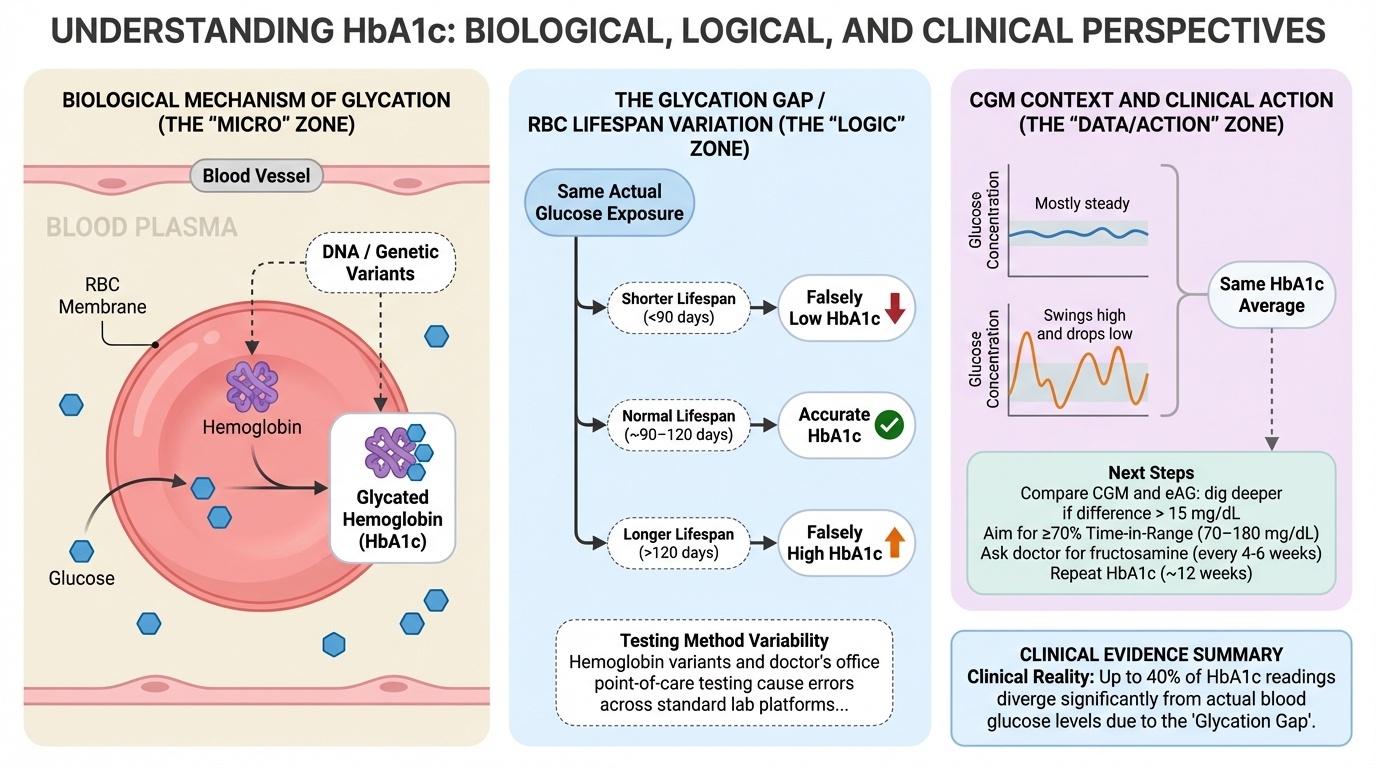
Your HbA1c Number May Be Lying to You — And Genetics Explains Why

Your HbA1c Number May Be Lying to You — And Genetics Explains Why

Up to 40% of people have systematic differences between their HbA1c and actual glucose exposure

Diagram glossary
CGM:
A wearable device that continuously monitors blood sugar levels throughout the day.
DNA:
The genetic material that can contain variants affecting red blood cell biology and HbA1c.
eAG:
Estimated average glucose, a metric translating HbA1c into an average blood sugar level.
fructosamine:
A diagnostic blood test used to measure average glucose levels over a few weeks.
Glucose:
A simple sugar in the blood that attaches to hemoglobin over time.

Track this in your stack

See how hba1c relates to your health goals, compare it against evidence tiers, and monitor changes in your biomarkers over time.

Open Aviado

Conclusions

Berberine and nigella sativa have the strongest evidence for lowering HbA1c, with proven status across multiple meta-analyses. Berberine lowers HbA1c by about 6.6% and has the broadest evidence base (30 studies). Nigella sativa shows the largest effect size at 9.6% reduction. Curcumin, omega-3 fatty acids, and glucomannan offer moderate evidence as secondary options. Probiotics and alpha-lipoic acid have smaller but real effects. All supplements work best as additions to — not replacements for — diet, exercise, and medical care. Start with one well-chosen supplement, track your HbA1c over 3 months, and work with your healthcare provider.

Limitations

Several important limitations should be considered. First, most studies were conducted in people with type 2 diabetes or prediabetes — results may not apply to people with normal blood sugar. Second, study durations were typically 8 to 16 weeks, and long-term safety data beyond 12 months is limited for most supplements. Third, many trials were conducted in specific populations (particularly Asian and Middle Eastern), and responses may vary across ethnic groups. Fourth, supplement quality and standardization vary enormously between products, meaning the berberine or nigella sativa you buy may not match what was used in studies. Fifth, the key findings listed in the database for some supplements (like berberine and nigella sativa) focused on cholesterol rather than HbA1c specifically, though the HbA1c effect sizes are drawn from the broader evidence base. Sixth, individual responses vary widely — genetics, diet, medication use, and baseline health all influence outcomes. Finally, publication bias may inflate reported effect sizes, as studies showing no effect are less likely to be published.

Sources (20)

1

Efficacy and safety of berberine for dyslipidaemias: A systematic review and meta-analysis of randomized clinical trials

Ju J et al.. Phytomedicine, 2018.

PMID: 30466986
2

The Effect of Berberine Supplementation on Glycemic Control and Inflammatory Biomarkers in Metabolic Disorders: An Umbrella Meta-analysis of Randomized Controlled Trials

Asbaghi O et al.. Complementary Therapies in Medicine, 2023.

PMID: 38016844
3

The effect of berberine supplementation on obesity parameters, inflammation and liver function enzymes: A systematic review and meta-analysis of randomized controlled trials

Ilyas Z et al.. Complementary Therapies in Medicine, 2020.

PMID: 32690176
4

The effect of berberine supplementation on obesity indices: A dose-response meta-analysis and systematic review of randomized controlled trials

Asbaghi O et al.. Complementary Therapies in Medicine, 2020.

PMID: 32379652
5

The effects of berberine supplementation on cardiovascular risk factors in adults: A systematic review and dose-response meta-analysis

Zamani M et al.. Frontiers in Nutrition, 2022.

PMID: 36313096
6

Effects of Nigella sativa supplementation on lipid profiles in adults: An updated systematic review and meta-analysis of randomized controlled trials

Sahebkar A et al.. Phytotherapy Research, 2024.

PMID: 38777430
7

A systematic review of the anti-obesity and weight lowering effect of Nigella sativa and its major component, thymoquinone

Namazi N et al.. Journal of Functional Foods, 2018.

PMID: 29857879
8

The effect of Nigella sativa supplementation on glycemic status in adults: An updated systematic review and meta-analysis of randomized controlled trials

Hadi A et al.. Phytotherapy Research, 2024.

PMID: 39181437
9

Antihypertensive effects of Nigella sativa supplementation: An updated systematic review and meta-analysis of randomized controlled trials

Mohtashami R et al.. Journal of Ethnopharmacology, 2023.

PMID: 37341696
10

Nigella sativa supplementation and effects on lipid profiles: A systematic review and meta-analysis

Sahebkar A et al.. Complementary Therapies in Medicine, 2016.

PMID: 26875640
11

An umbrella meta-analysis on the effects of curcumin/turmeric supplementation on liver function in patients with NAFLD

Jalali M et al.. Phytotherapy Research, 2023.

PMID: 37918958
12

Omega-3 PUFA supplementation and apolipoprotein C-III concentrations: A meta-analysis of randomized controlled trials

Aung T et al.. Lipids in Health and Disease, 2018.

PMID: 30102092
13

Omega-3 PUFAs supplementation and triglyceride levels: A meta-analysis of RCTs

Wang C et al.. Nutrition, Metabolism and Cardiovascular Diseases, 2023.

PMID: 37222574
14

The effect of glucomannan on fasting blood glucose and lipid profiles: A systematic review and meta-analysis

Sood N et al.. American Journal of Clinical Nutrition, 2008.

PMID: 18842808
15

The effect of alpha-lipoic acid supplementation on LDL cholesterol: A meta-analysis

Mohammadi V et al.. Journal of Diabetes and Metabolic Disorders, 2021.

PMID: 34605276
16

Dietary intake of alpha-linolenic acid and triglyceride concentrations: A meta-analysis

Wei J et al.. Nutrition Reviews, 2020.

PMID: 32643951
17

Chlorella supplementation and lipid profiles: A meta-analysis of RCTs

Fallah AA et al.. Clinical Nutrition, 2018.

PMID: 29037431
18

Lactobacillus supplementation and lipid profiles in overweight or obese adults: A meta-analysis of RCTs

Wang L et al.. Frontiers in Nutrition, 2022.

PMID: 35820261
19

Bifidobacterium supplementation and metabolic outcomes in cognitive impairment: A meta-analysis

Zhang Y et al.. Frontiers in Nutrition, 2024.

PMID: 40752774
20

Inflammatory markers and noncoding-RNAs responses to HIIT with or without berberine supplementation in men with prediabetes

Ghanavati M et al.. Complementary Therapies in Medicine, 2024.

PMID: 39107107