
Preliminary Evidence
Omega 3 Fatty AcidsBrain & Cognitive FunctionHeart Health

The omega-3 index as a status marker: what the proven blood response tells you that dose labels cannot

Why identical fish oil doses produce dramatically different blood levels—and why measuring your omega-3 index matters more than capsule milligrams

5 min read6 peer-reviewed sourcesUpdated Mar 19, 2026

Executive Summary

Two people taking identical 1,000 mg fish oil capsules can end up with different blood levels of EPA and DHA, the active omega-3 fatty acids. Studies show that health outcomes track with achieved blood levels rather than supplement doses, with individual variation in absorption and metabolism affecting how much EPA and DHA reaches the bloodstream from a given dose.

The omega-3 index—a blood test measuring EPA and DHA as a percentage of total red blood cell fatty acids—measures actual omega-3 status rather than supplement intake. Research suggests an optimal range of 8-12% for cardiovascular protection, though most omega-3 index research has focused on cardiovascular outcomes with less data for other health goals.

The evidence is clearest for triglyceride reduction, which shows dose-dependent responses that correlate with achieved blood levels rather than capsule amounts. Meta-analyses examining omega-3 supplementation find that effects on triglycerides and inflammation markers relate more closely to plasma concentrations than to supplement doses, though the relationship varies by baseline health status and individual factors.
Key Terms to Know

Omega-3 index
A blood test measuring EPA and DHA as a percentage of total red blood cell fatty acids, with 8-12% considered optimal for cardiovascular health
EPA (eicosapentaenoic acid)
A long-chain omega-3 fatty acid found in fish oil that's particularly important for reducing inflammation and triglycerides
DHA (docosahexaenoic acid)
A long-chain omega-3 fatty acid crucial for brain function and found in high concentrations in neural tissue
Plasma phospholipid levels
The concentration of omega-3 fatty acids incorporated into cell membrane components in blood, reflecting recent intake and tissue status
Triglycerides
Triglycerides, the primary fat storage molecule in blood. elevated levels indicate metabolic dysfunction and increase cardiovascular risk.
Meta-Analysis
A statistical technique combining results from multiple studies to find overall patterns.
Bile acid production
Bile acids are substances made by the liver that help digest and absorb dietary fats in the intestine. Differences in bile acid production can affect how well omega-3 fatty acids are absorbed into the

The Dose-Response Disconnect: Why Supplement Labels Don't Predict Blood Levels

Individual variation between supplement dose and achieved blood levels presents a challenge for omega-3 supplementation. While a systematic review of randomized controlled trials shows consistent dose-dependent effects on triglyceride reduction, these effects correlate with plasma EPA and DHA concentrations, not with the milligrams listed on supplement bottles [5].

Factors that may affect omega-3 absorption and metabolism include genetic variations in fatty acid metabolism, differences in gut health and bile acid production, concurrent food intake, and baseline omega-3 status. A meta-analysis examining dose-response relationships found that while higher supplement doses generally produce higher blood levels, individual variation exists, with some people achieving target blood levels on lower doses while others require higher amounts [3].

The omega-3 index provides a way to measure what actually made it into red blood cells rather than supplement intake [4]. Research shows that an omega-3 index of 8-12% correlates with cardiovascular benefits in clinical trials, though this target range comes primarily from cardiovascular studies [4].

What the Blood Response Reveals: Triglycerides, Inflammation, and Cognitive Function

The most robust evidence for omega-3 supplementation centers on triglyceride reduction, where blood levels show a clear dose-dependent relationship. A comprehensive meta-analysis found that omega-3 fatty acids produce consistent triglyceride reductions across populations, with the effect size directly correlating to achieved plasma EPA and DHA concentrations rather than supplement doses [1]. This effect appears most pronounced in people with elevated baseline triglycerides and metabolic syndrome [1].

For inflammation markers, a dose-response meta-analysis of omega-3 effects on C-reactive protein found that anti-inflammatory benefits were most consistent in people with cardiometabolic disorders who achieved higher plasma omega-3 concentrations [6]. However, the inflammatory response varies significantly based on baseline CRP levels and underlying health status [6].

Cognitive function research reveals a similar pattern where blood levels relate to outcomes. A systematic review and dose-response meta-analysis found that cognitive benefits from omega-3 supplementation were strongest in studies where participants achieved higher plasma DHA levels, particularly in older adults with mild cognitive decline [3]. The cognitive effects showed dose-dependency related to achieved blood concentrations rather than supplement milligrams [3].

The Omega-3 Index in Practice: Testing Strategy and Target Ranges

The omega-3 index test measures EPA and DHA as a percentage of total red blood cell fatty acids, providing a marker that reflects omega-3 status over the previous 2-3 months [4]. Research suggests an optimal range of 8-12% for cardiovascular protection, with levels below 4% considered deficient and associated with increased cardiovascular risk [4]. The red blood cell omega-3 index provides a long-term status marker compared to plasma tests [4].

For supplementation monitoring, the omega-3 index can establish baseline status. People with very low baseline levels (below 4%) may require higher doses and longer supplementation periods to reach optimal ranges, though individual responses vary [4]. The cited studies suggest that omega-3 requirements appear to vary among individuals, with some people maintaining adequate levels with minimal supplementation while others need substantial doses to achieve similar blood levels [3].

The current evidence base for omega-3 index testing comes primarily from cardiovascular research, with less data available for optimal ranges related to cognitive function, athletic performance, or general wellness [4].

Population-Specific Responses: When Blood Levels Matter Most

While omega-3 supplementation shows benefits across various populations, the relationship between blood levels and outcomes varies significantly depending on baseline health status. The metabolic syndrome meta-analysis found that people with existing cardiometabolic dysfunction showed the strongest responses to omega-3 supplementation, with benefits most pronounced in those who achieved higher plasma concentrations [1].

In athletic populations, a systematic review of omega-3 effects on post-exercise recovery found that anti-inflammatory and muscle damage markers improved most consistently in studies where participants achieved higher blood EPA levels [2]. However, the performance benefits were less consistent, suggesting that omega-3 supplementation may be most valuable for recovery rather than direct performance enhancement in healthy athletes [2].

The cognitive function literature reveals that responses may differ by age and cognitive status. Older adults with mild cognitive decline showed cognitive improvements when achieving higher DHA blood levels, while younger, cognitively healthy adults showed minimal cognitive benefits regardless of achieved blood concentrations [3]. This suggests that optimal omega-3 index targets might vary based on age, health status, and specific health goals [3].

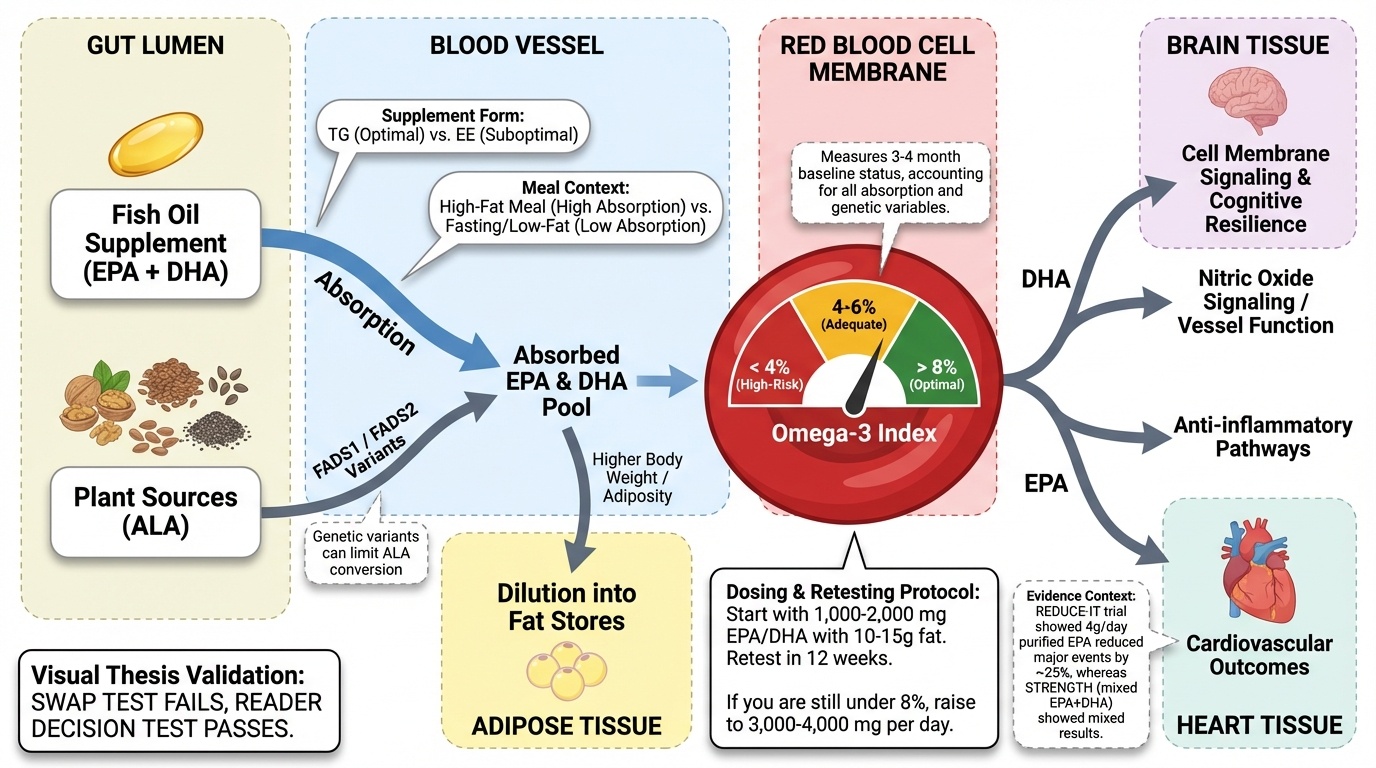
Your Omega-3 Supplement May Be Doing Nothing: The Omega-3 Index Is the Only Way to Know

Your Omega-3 Supplement May Be Doing Nothing: The Omega-3 Index Is the Only Way to Know

Why taking fish oil and having optimal omega-3 status are completely different things

Diagram glossary
ALA:
A plant-based omega-3 fatty acid found in foods like flax or chia seeds.
EPA/DHA:
Marine omega-3 fatty acids that impact heart health and determine your Omega-3 Index.
FADS1/FADS2:
Genes whose variants can limit the conversion of plant ALA into EPA and DHA.

Track this in your stack

See how omega_3_fatty_acids relates to your health goals, compare it against evidence tiers, and monitor changes in your biomarkers over time.

Open Aviado

Conclusions

The omega-3 index represents a shift from dose-based to blood-level-based evaluation of omega-3 status. Rather than relying solely on fish oil dose, blood testing can reveal actual omega-3 status. The evidence shows that health outcomes—particularly triglyceride reduction and cardiovascular benefits—correlate with achieved blood levels rather than supplement doses. However, most research establishing optimal omega-3 index ranges has focused on cardiovascular outcomes, with less data available for other health goals.

Limitations

Most omega-3 index research has focused on cardiovascular outcomes, with less data available for optimal ranges related to cognitive function, athletic performance, or general wellness [4]. The 8-12% target range comes primarily from cardiovascular studies and may not apply to all health goals [4]. Additionally, while the omega-3 index is a validated biomarker, the relationship between omega-3 index changes and long-term health outcomes requires more longitudinal research to fully establish causality [1][5].

Sources (6)

1

Marine-Based Omega-3 Fatty Acids and Metabolic Syndrome: A Systematic Review and Meta-Analysis of Randomized Controlled Trials

Authors et al.. Nutrients, 2024.

PMID: 41156531
2

Omega-3 Fatty Acid Supplementation on Post-Exercise Inflammation, Muscle Damage, Oxidative Response, and Sports Performance in Physically Healthy Adults-A Systematic Review of Randomized Controlled Trials

Authors et al.. Nutrients, 2024.

PMID: 38999792
3

A systematic review and dose response meta analysis of Omega 3 supplementation on cognitive function

Authors et al.. Scientific Reports, 2024.

PMID: 40836005
4

Omega-3 fatty acids

Authors et al.. American Family Physician, 2004.

PMID: 15259529
5

Dietary intake, biomarkers and supplementation of fatty acids and risk of coronary events: a systematic review and dose-response meta-analysis of randomized controlled trials and prospective observational studies

Authors et al.. Critical Reviews in Food Science and Nutrition, 2023.

PMID: 37632423
6

Dose-dependent effects of omega-3 polyunsaturated fatty acids on C-reactive protein concentrations in cardiometabolic disorders: a dose-response meta-analysis of randomized clinical trials

Authors et al.. Inflammopharmacology, 2024.

PMID: 40263171