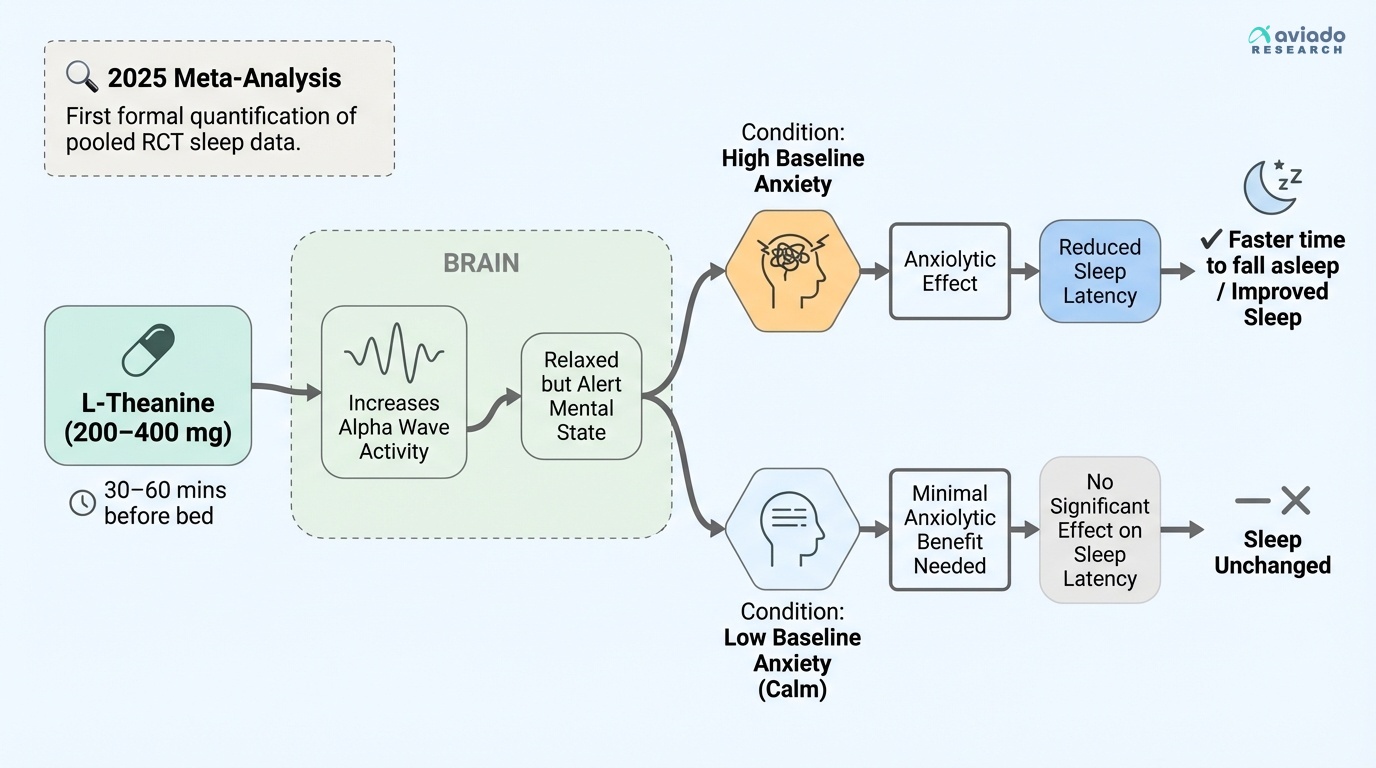
L-theanine research has followed an unusual path. While the amino acid was first isolated from tea leaves in 1949, serious investigation into its sleep effects didn't begin until the early 2000s. Individual randomized controlled trials trickled out over the following decades, each showing modest but inconsistent results for sleep quality and time to fall asleep [11].
The challenge wasn't that the studies were poorly designed — many were rigorous, double-blind, placebo-controlled trials. The problem was that each study used different populations, different doses, and different outcome measures. Some focused on healthy adults, others on people with diagnosed sleep disorders, and still others on individuals with high stress levels. Without a comprehensive analysis pooling these results, it was impossible to determine who actually benefits from L-theanine for sleep.
This fragmented evidence base led to widespread marketing claims that weren't necessarily supported by the full picture. Supplement companies could point to individual positive studies while ignoring negative or mixed results. The 2025 meta-analysis represents the first attempt to systematically combine all available sleep data and identify patterns that individual studies couldn't reveal [11].