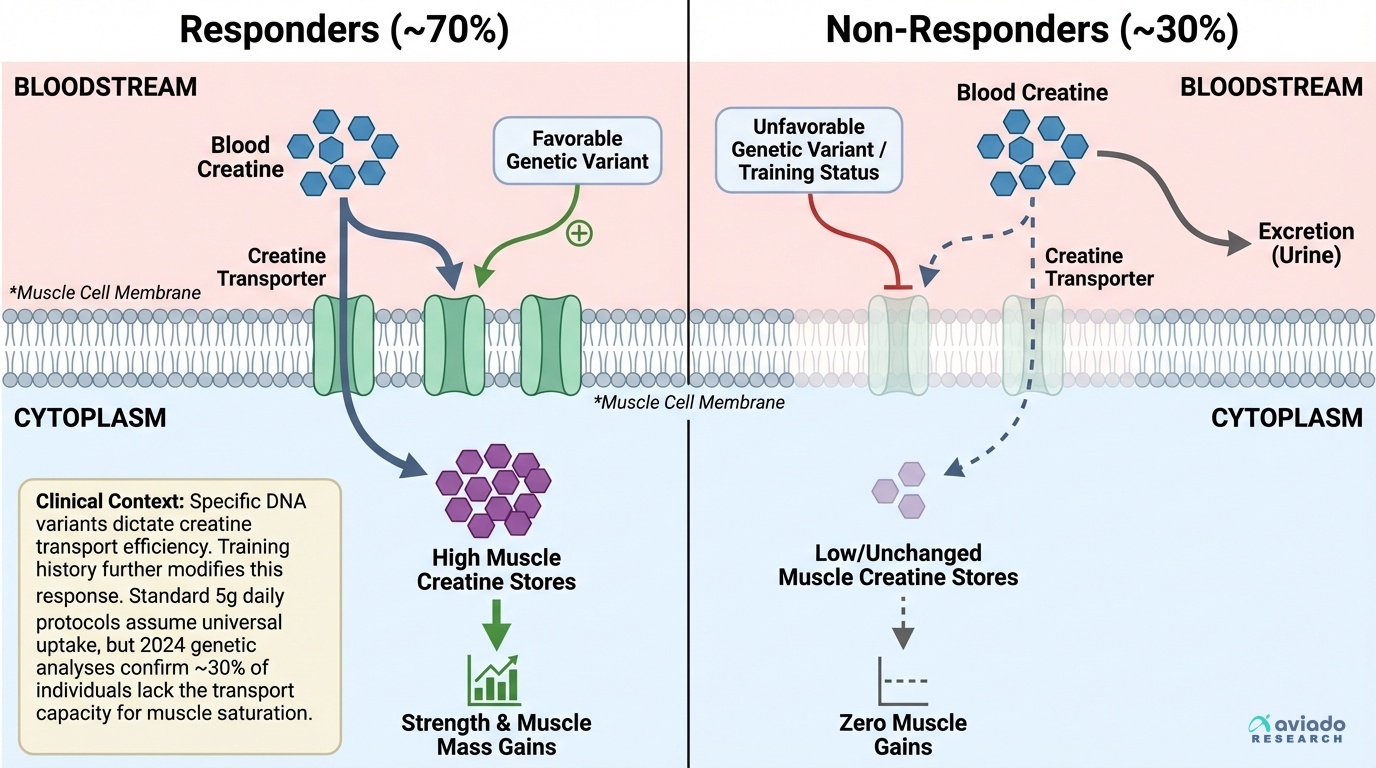
For decades, creatine has been called the most researched sports supplement, with hundreds of studies showing it works for strength and muscle mass. But a closer look at the data reveals a puzzling inconsistency: some studies show dramatic 20-30% strength improvements, while others show barely measurable effects. The difference wasn't in study quality or dosing protocols—it was in the participants' DNA.
The breakthrough came from studying professional athletes, where researchers could control for training, diet, and motivation variables that might mask genetic effects. When they analyzed genetic markers alongside creatine response, clear patterns emerged. Specific gene variants that control creatine transport into muscle cells predicted who would gain lean mass and who wouldn't, regardless of how perfectly they followed supplementation protocols.
This genetic component explains why creatine research has been so confusing. Meta-analyses that average results across hundreds of participants are mixing genetic responders with non-responders, diluting the true effect size. For responders, creatine is genuinely transformative. For non-responders, it's expensive urine production. The problem is that until recently, no one knew which group they belonged to.