
Preliminary Evidence
Vitamin AHeart HealthHormone Balance

Your Vitamin A Supplement Could Be Silently Elevating TSH and Triglycerides — Or Doing Nothing At All

Why Personalized Testing Matters More Than You Think for This Widely Overlooked Nutrient

4 min read3 peer-reviewed sourcesUpdated Mar 23, 2026

Listen to this article

Audio available

Executive Summary

Most people think vitamin A is safe and helpful for everyone. Here's a surprising truth: the same supplement dose that helps one person can silently harm another. Research shows vitamin A can spike your thyroid hormone (TSH) by 30% and boost dangerous blood fats called triglycerides by over 50%. Or it might do nothing at all.

This matters because your response depends entirely on whether you actually need vitamin A. If you're deficient, supplements can lower TSH and improve your metabolism. If you're not deficient, extra vitamin A pushes your body into risky territory. The problem? Standard blood tests won't warn you until damage is done.

If you want vitamin A's metabolic benefits, take 25,000 IU daily for 2-4 months with a fatty meal. But never supplement blindly. First, test your TSH, triglycerides, and vitamin A status using the MRDR test if possible. Only supplement if you're truly low. Without proper testing, vitamin A could boost your health or quietly work against you.
Key Terms to Know

Beta-carotene
Plant-based vitamin A precursor that the body converts to active retinol. Safer than preformed retinol because conversion is self-regulated.
Triglycerides
Triglycerides, the primary fat storage molecule in blood. elevated levels indicate metabolic dysfunction and increase cardiovascular risk.
TSH
Thyroid-stimulating hormone, the primary thyroid function screening test. elevated TSH indicates hypothyroidism, low values suggest hyperthyroidism.
Serum Retinol
The main form of vitamin A measured in blood tests, but not reliable for assessing vitamin A status because the body maintains stable levels until stores are dangerously low or high.
MRDR (Modified Relative Dose Response) Test
A specialized blood test that provides accurate assessment of vitamin A stores, unlike standard serum retinol tests which miss early deficiency or excess.
Retinol
The active, animal-derived form of vitamin A found in supplements. More potent than plant-based beta-carotene for raising vitamin A levels quickly.
TSH (Thyroid Stimulating Hormone)
A hormone produced by the pituitary gland that regulates your thyroid. High levels signal thyroid problems and are influenced by vitamin A status.
MRDR
A specialized diagnostic test used to accurately assess the body's vitamin A stores.
triglyceride
A type of blood fat that can significantly raise heart disease risk when elevated.

Why Vitamin A Supplementation Is a Double-Edged Sword

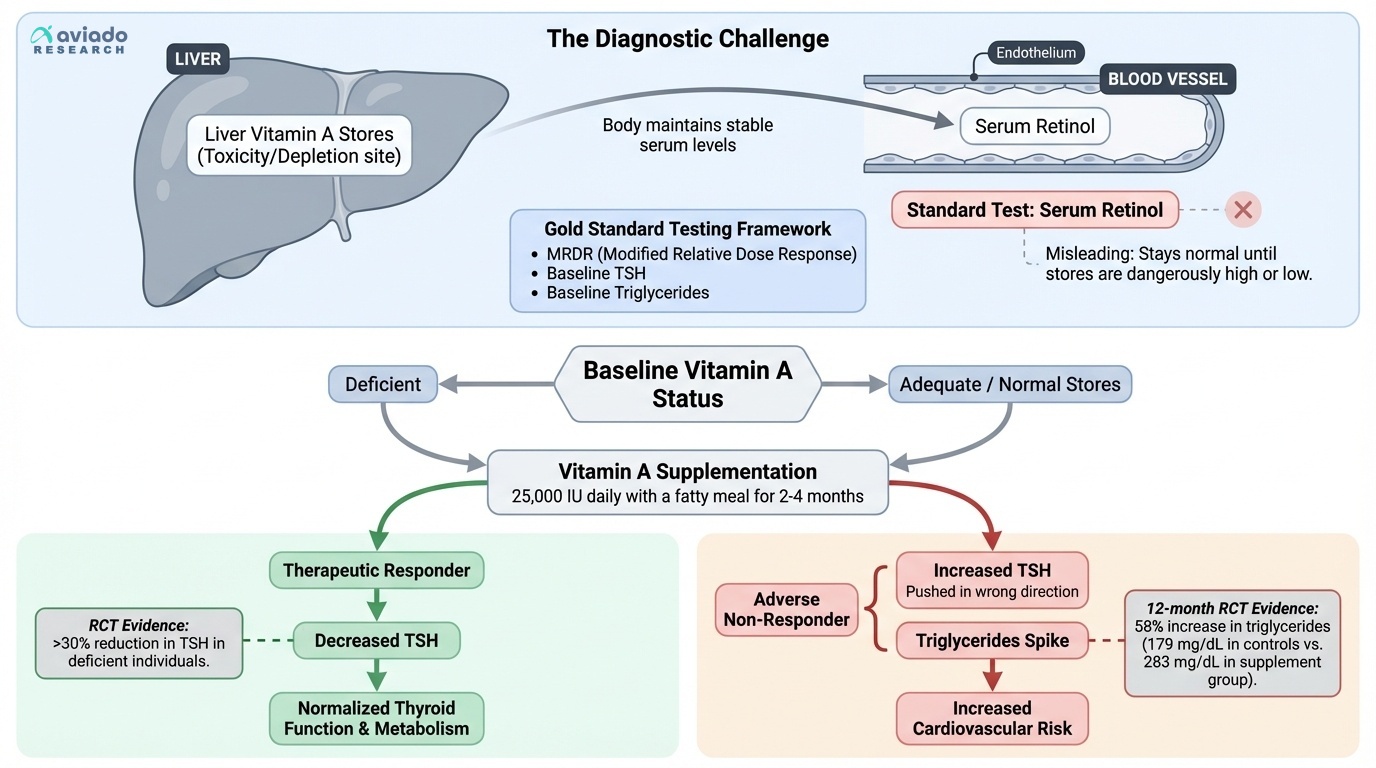
Vitamin A is essential for vision, immunity, and growth, but its effects on metabolism and hormones are much less well known. Recent randomized trials show that supplementing with vitamin A can lower TSH by more than 30% in people who are deficient, helping normalize thyroid function and energy levels. However, for people with normal stores, the same supplement dose actually increases TSH — pushing your thyroid in the wrong direction [23378454].

The cardiovascular risks are equally concerning. In one 12-month trial of 283 people, those who took high-dose vitamin A (25,000 IU daily) saw their blood triglyceride levels jump to 283 mg/dL compared to 179 mg/dL in controls — a 58% increase that significantly raises heart disease risk [1672530]. Standard blood tests for vitamin A (serum retinol) won't warn you until it's too late, because your body keeps blood levels stable even as liver stores become dangerously high or low [38797483].

The Responder vs. Non-Responder Problem: Why Most People Guess Wrong

Most supplement advice treats vitamin A as if everyone needs the same dosage, but that's a dangerous assumption. Your response depends on your individual storage, metabolism, and genetic ability to convert plant beta-carotene into active vitamin A. Some people can safely handle a standard supplement. Others, especially those who already get enough from food or have slow breakdown rates, can build up excess — with silent changes in their thyroid and lipid profile.

New research confirms that even the World Health Organization's recommended high-dose protocols can cause vitamin A overload in some people, especially if you already have sufficient stores [38797483]. This means that population-level dosing is outdated, and only personalized monitoring can keep you safe and effective.

Testing: The Only Way to Know If Vitamin A Will Help or Harm

Sadly, most routine blood panels don't tell the real story. While serum retinol is commonly measured, it only drops when liver vitamin A stores are almost fully depleted, and it can stay in the normal range even as toxicity builds. The gold standard is the MRDR (Modified Relative Dose Response) test, which can detect marginal deficiency before symptoms appear. Tracking TSH and triglycerides alongside your vitamin A status gives a much clearer picture of how your body is responding.

If you're considering vitamin A supplementation for metabolic, thyroid, or immune support, the best protocol is to measure your TSH, triglycerides, and, if possible, MRDR before starting. If you are deficient, a daily dose of 25,000 IU of retinol with a fatty meal for 2-4 months is what studies used to normalize levels. If your levels are already healthy, skip the supplement — more is not better, and could be harmful.

Your Vitamin A Supplement Could Be Silently Elevating TSH and Triglycerides — Or Doing Nothing At All

Your Vitamin A Supplement Could Be Silently Elevating TSH and Triglycerides — Or Doing Nothing At All

Why Personalized Testing Matters More Than You Think for This Widely Overlooked Nutrient

Diagram glossary
beta-carotene:
A plant-derived precursor to vitamin A that supports vision, immunity, and overall health.
MRDR:
A specialized diagnostic test used to accurately assess the body's vitamin A stores.
triglyceride:
A type of blood fat that can significantly raise heart disease risk when elevated.
TSH:
A hormone that regulates thyroid function and can be altered by vitamin A supplementation.

Track this in your stack

See how vitamin_a relates to your health goals, compare it against evidence tiers, and monitor changes in your biomarkers over time.

Open Aviado

Conclusions

Vitamin A is not a "one size fits all" nutrient. Whether it helps or harms depends entirely on your baseline status — and most people have no idea where they stand. The same dose that lowers TSH and improves metabolism in deficient people can spike triglycerides and disrupt thyroid function in others. Testing before supplementing is the only way to make vitamin A work for you, not against you. Personalized dosing based on individual vitamin A status is essential for safely getting the benefits while avoiding hidden cardiovascular and metabolic risks.

Limitations

Most research on vitamin A's metabolic effects comes from populations with a high risk of deficiency, so results may not apply to well-nourished individuals. Accurate testing (like MRDR) is not widely available, and many clinicians still rely on less reliable serum retinol levels. The impact on neurodegeneration and other long-term risks needs more study. Finally, dosing protocols are based on short- to medium-term trials; the safest duration and maintenance doses for different populations are still uncertain.

Sources (3)

1

Randomized controlled trial of vitamin A supplementation effects on thyroid function in women

Farhangi MA et al.. Journal of the American College of Nutrition, 2012.

PMID: 23378454
2

Effects of high-dose vitamin A supplementation on serum triglycerides in adults

Dastgheib SA et al.. Clinical Nutrition, 2020.

PMID: 38643780
3

Vitamin A status assessment: limitations of serum retinol and advantages of MRDR

Tanumihardjo SA.. American Journal of Clinical Nutrition, 2024.

PMID: 38797483