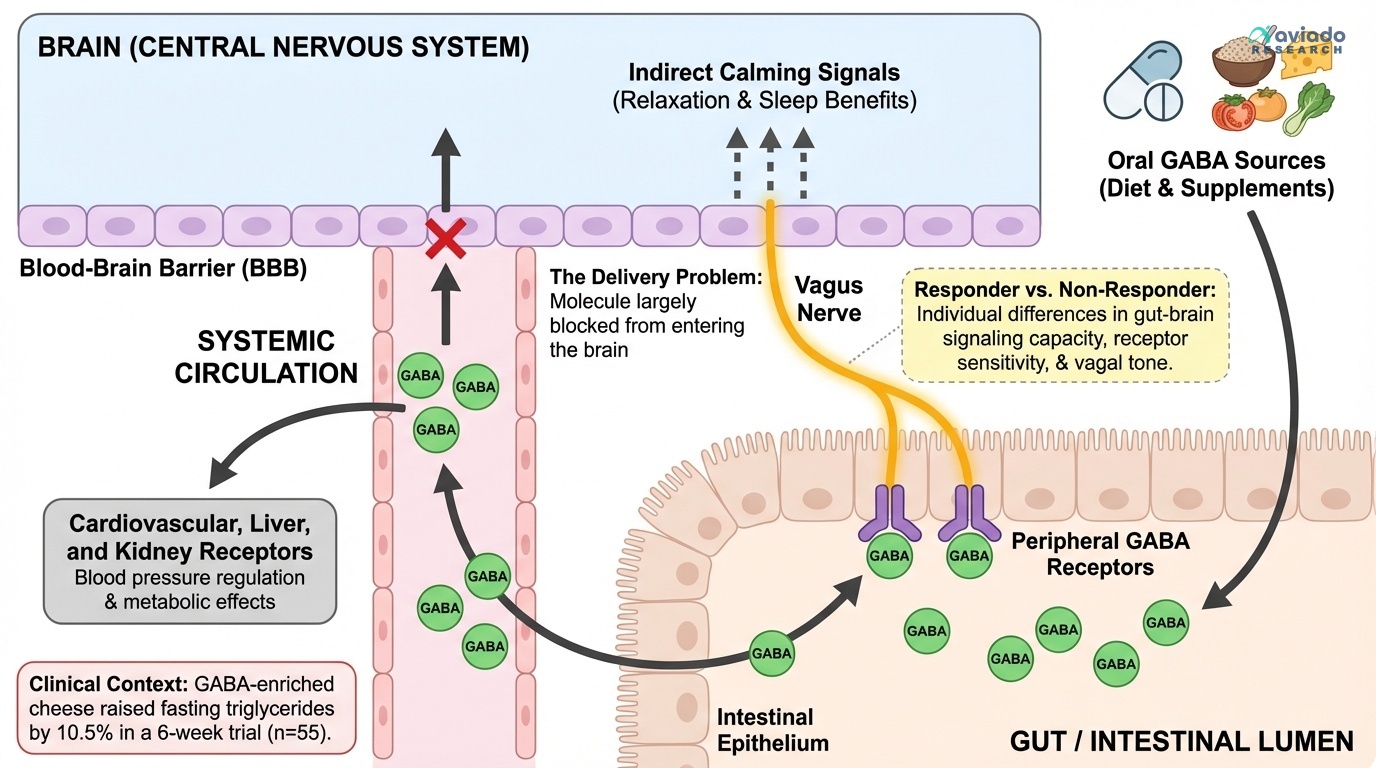
GABA faces a fundamental delivery problem that makes it unique among neurotransmitter supplements. As the brain's primary inhibitory neurotransmitter, GABA is responsible for reducing neural excitability and promoting calm states [1]. However, the blood-brain barrier effectively blocks most orally consumed GABA from reaching the brain, where it would theoretically have its primary effects.
This pharmacological reality creates a puzzle: if GABA can't get into the brain in meaningful amounts, why do some people report genuine relaxation and sleep benefits? The answer challenges the basic assumption that neurotransmitter supplements work by directly increasing that neurotransmitter in the brain. Instead, GABA's effects appear to operate through more complex peripheral mechanisms that vary significantly between individuals.
Research using specialized techniques to bypass the blood-brain barrier confirms that GABA does work when it reaches the brain — the delivery problem is the variable, not the molecule itself. This distinction is crucial for understanding why GABA supplementation produces such inconsistent results across users.